Overview
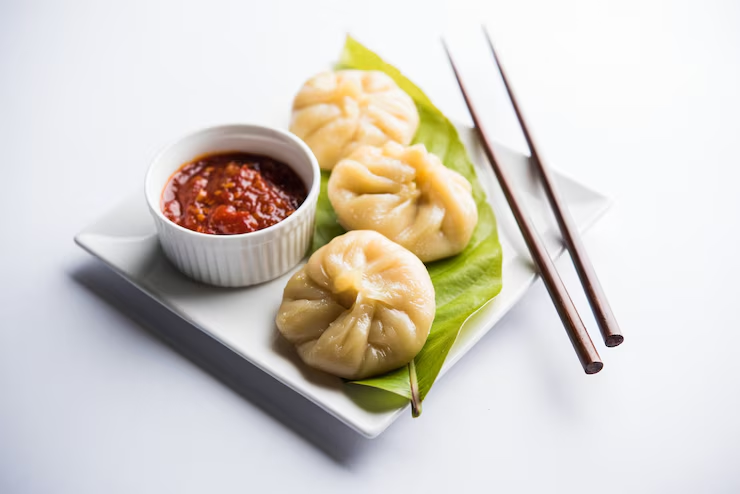
The popular Himalayan dumplings known as momos have spread beyond their homeland to become a worldwide culinary sensation. These little treats provide a palate-pleasing explosion of flavours and textures, whether they are steamed, fried, or served in soup. You can make momos in your own kitchen with the help of this thorough book, which explores the dish’s varied varieties, rich history, and methodical preparation.
The History of Momos
The origins of momos can be found in Tibet, where they were traditionally prepared with highland barley flour and stuffed with minced meat, usually goat or yak. The momo changed over time as Tibetan culture expanded over the Himalayan area, encompassing Nepal, Bhutan, and portions of India. These days, they are prepared using all-purpose flour and come with a range of fillings to accommodate different dietary requirements and palates.
Important Components
You’ll need the following items to make real momos:
Regarding the dough:
Two cups of all-purpose flour
Half a teaspoon of salt
Water (if required)
Regarding the Filling:
One cup of cabbage, chopped finely
Half a cup of carrots, grated
Half a cup of finely chopped onions
Two teaspoons of spring onions, cut finely
One tablespoon of finely chopped garlic
One tablespoon of ginger, minced
Two tablespoons of soy sauce
One tablespoon of sesame oil
To taste, add salt and pepper.
Regarding the Dipping Sauce:
Two teaspoons of tomato sauce
One spoonful of soy sauce
One spoonful of chilli sauce
One teaspoon of vinegar
One teaspoon of sugar
Methodical Preparation
1. Getting the dough ready:
Put the salt and all-purpose flour in a mixing basin. Add water little by little and knead until the dough is elastic and smooth. Let the dough rest for at least half an hour after covering it with a moist cloth. The gluten relaxes during rest, which facilitates rolling out the dough.
2. Filling Preparation:
Heat the sesame oil in a pan over medium heat. Add the ginger and minced garlic, and cook until fragrant. Cook the chopped onions until they become transparent. Add the carrots and cabbage and simmer until the veggies are soft. Add the spring onions and soy sauce, and season with salt and pepper. Take off the heat and allow the mixture to cool.
3. Putting the Momos Together:
Roll each of the small sections of rested dough into a ball. Roll each ball into a thin circle about 3 inches across on a lightly floured surface. In the middle of each circle, put a spoonful of the filling. To create a half-moon, carefully fold the borders over the filling, making pleats as you go. Seal the momo by pinching the top.
4. Making the Momos Steamy:
Line a steamer basket with parchment paper or grease it with oil. Make sure the momos are not in contact with one another when you arrange them in the basket. For 10 to 12 minutes, or until the dough is transparent and the filling is thoroughly cooked, steam over boiling water.
5. Dipping Sauce Preparation:
Combine the chilli sauce, vinegar, sugar, soy sauce, and tomato ketchup in a small bowl. Stir thoroughly until the sugar is dissolved. Taste and adjust the seasoning.
Different Types of Momos
Although many people enjoy the traditional vegetarian momo, there are many other options to try:
Chicken Momos: Use minced chicken seasoned with ginger, garlic, and soy sauce in place of the vegetable filling.
Buff Momos: Made with minced buffalo meat and flavorful spices, these are a typical option in Nepal.
Cheese Momos: A fusion twist, these momos have a creamy texture and are packed with a blend of paneer and spices.
Tandoori Momos: These momos get their smoky flavour from being grilled after being steamed and marinated in a spiced yoghurt mixture.
Jhol Momos: Served in a fiery, acidic soup, these steamed momos are a Nepali speciality.
Serving Recommendations
The greatest way to enjoy a momos is hot and fresh. Serve them with a hot chutney or the prepared dipping sauce. To improve the dining experience, serve with a refreshing beverage or a warm cup of tea.
Information on Nutrition
With a mix of vegetables, proteins, and carbs, momos are a well-balanced snack. Depending on the filling and cooking technique, the nutritional value may change. Steamed momos are healthier than fried ones since they have fewer calories.
Advice for Optimal Momos
For easier rolling and shaping, make sure the dough is elastic and smooth.
To avoid the momos popping during steaming, do not overfill them.
To preserve the filling and juices, firmly seal the edges.
To prevent overcrowding, which might result in uneven cooking, steam in batches.
Try a variety of fillings and spices to see what suits your palate.
In conclusion
A cultural event that unites people, momos are more than just a meal. You may replicate the genuine flavour of Himalayan dumplings in your own home by using this recipe. Momos provide a pleasant, cross-border culinary experience, whether you want them steamed, fried, or in soup. Savour the creation process just as much as the finished item.