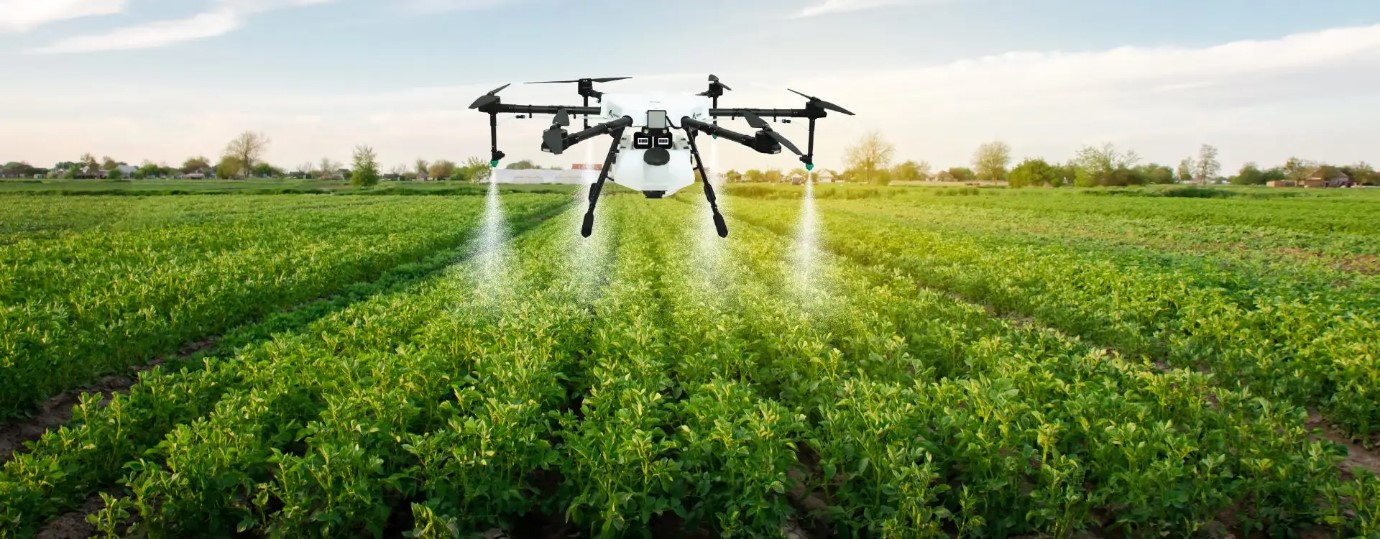
The agricultural drone market is undergoing a structural shift as digital tools increasingly replace labor-intensive practices. Among these tools, agricultural drones have emerged as one of the most impactful technologies. These unmanned aerial vehicles are no longer experimental solutions; they are now integral to large-scale agricultural operations, delivering measurable productivity, environmental, and economic benefits.
Understanding Agricultural Drones in Farming Operations
Agricultural drones are unmanned aircraft specifically designed for farm-related tasks such as crop spraying, monitoring, seeding, and transportation. Equipped with precision spraying systems, cameras, and sensors, they enable farmers to manage crops more accurately while reducing resource waste. Unlike traditional machinery, drones operate above crops, minimizing soil compaction and allowing access to difficult terrain. Their ability to perform targeted applications also improves input efficiency, which is increasingly important as farms face rising costs and environmental constraints.
Large-Scale Adoption: China as a Global Benchmark
China currently represents the most advanced example of agricultural drone deployment at scale. According to a 2025 industry report, agricultural drones in China covered 173 million hectares of farmland in 2024, demonstrating how rapidly this technology has been integrated into mainstream farming practices. This level of adoption is supported by a strong domestic manufacturing base, extensive training programs, and government recognition of drones as part of the national low-altitude economy. As of June 2025, more than 500,000 agricultural drones were in operation globally, with China accounting for a significant share.
Key Deployment Metrics
| Indicator | Verified Data |
| Farmland covered in China (2024) | 173 million hectares |
| Global agricultural drones in operation | Over 500,000 units |
| Estimated market value in China | ~US$1.8 billion |
| Employment created | ~500,000 jobs |
Expanding Applications Beyond Crop Spraying
While crop spraying remains the most common use case, agricultural drones are increasingly applied across multiple farming activities. In logistics-focused regions, drones are being used to transport produce from remote or mountainous areas. In Hubei province, drones transported 85 kg of oranges in just two minutes, significantly reducing handling time.
In Yunnan province, drone-based transport reduced banana losses from 30% to less than 5%, demonstrating their role in minimizing post-harvest waste. Similarly, in Inner Mongolia, drone-assisted weed management increased corn yields by over 10% through precise application.
Environmental and Resource Efficiency Impact
Environmental performance is a major driver behind agricultural drone adoption. Drone-based spraying techniques reduce chemical drift and water usage. Globally, agricultural drones have contributed to savings of approximately 330 million metric tons of water while reducing carbon emissions by an estimated 42.6 million metric tons.
Social and Workforce Transformation
Beyond technology and sustainability, agricultural drones are reshaping rural employment. The sector has created approximately 500,000 jobs, including technical, operational, and service roles. Notably, more than 12,000 women are now certified drone operators, reflecting increased inclusivity in agricultural technology careers.
Policy Support and Strategic Importance
China’s policy framework recognizes agricultural drones as part of the broader low-altitude economy, placing them alongside strategic technologies such as big data and artificial intelligence. This formal recognition has accelerated investment, standardization, and adoption.
Next Steps
- Assess Operational Fit: Identify farm activities where drones can deliver immediate efficiency gains.
- Prioritize Training: Invest in certified operator programs to ensure safe and effective use.
- Measure Performance: Track yield, water savings, and cost reductions to quantify benefits.
- Engage Policymakers: Advocate for clear, supportive drone regulations.
- Explore Advanced Use Cases: Pilot logistics, monitoring, and data-driven applications.
Conclusion
Agricultural drones have moved beyond experimentation into large-scale, results-driven deployment. China’s experience shows how these systems can enhance productivity, reduce environmental impact, and create new economic opportunities. As regulatory frameworks mature and applications expand, agricultural drones will continue to play a central role in shaping the future of modern farming.
About the Author
Borna Dhar is an aspiring content writer with a strong interest in digital transformation, emerging technologies, and industry-focused research. She is building hands-on experience in creating clear, research-driven content that strengthens digital visibility and supports the evolving needs of modern businesses. With exposure to diverse sectors such as technology and digital services, she brings a fresh analytical perspective and contributes to communicating meaningful insights, innovation, and value propositions for niche and targeted audiences.