Overview
Retaining walls are more than simply ornamental features for your yard; they are practical constructions that control water flow, hold back dirt, stop erosion, and create usable level sections on sloping terrain. A retaining wall is a satisfying project that may change your landscape, whether you want to stop soil movement on a slope or give your garden more structure.
Although building a retaining wall might appear difficult, many homeowners can do it themselves with the correct preparation, tools, and methods. This post will guide you through every step of the process, from design and planning to construction and upkeep, offering comprehensive advice to guarantee your wall endures for many years.
Recognising the Function of Retaining Walls
It’s critical to comprehend the purpose of retaining walls before delving into specific building details. Particularly in sloping regions, these structures withstand the lateral soil pressure. They are able to:
Stop erosion
Make level spaces for walks, patios, and gardens.
Make drainage better
Enhance landscaping’s visual appeal
Give driveways and foundations structural stability.
The functions of various retaining wall types vary. The most popular types of walls are sheet piling, anchored, cantilevered, and gravity walls. Gravity walls made of timber, concrete blocks, or piled stone are the best option for the majority of home landscaping projects.
Making a Retaining Wall Plan
Planning is essential. Walls that are poorly constructed may collapse, have drainage issues, or require expensive repairs. The following are the main things to think about:
1. Wall Load and Height
The design and materials needed for your wall will depend on its height. DIY builders can usually handle walls that are no more than three to four feet high. Anything higher might need engineering or permits.
Additionally, think about what the wall will hold—soil only, or possibly buildings, vehicles, or water. Stronger designs and frequently expert involvement are required for heavier loads.
2. Type of Soil and Slope
One important issue is the behaviour of the soil. Clay soils expand and retain water, which raises the wall’s pressure. Although they drain well, sandy soils could require reinforcing. If at all possible, test the soil.
The amount of pressure that the wall must withstand is also influenced by the ground’s slope. More lateral force results from steeper slopes.
3. A Look at Drainage Issues
Poor drainage is one of the main reasons why retaining walls fail. A accumulation of water significantly raises pressure. Just as crucial as structural strength is appropriate drainage design.
4. Regulations and Permits
Consult your local building authority at all times. Walls over a specific height or close to property lines may need permissions in some places. Failure to do so may result in penalties or forced removal.
Selecting Appropriate Materials
Retaining walls can be made from a variety of materials, depending on your needs for strength, style, and budget:
Concrete blocks are durable, stackable, and simple to deal with. A lot of them have interlocking features.
Natural stone: Provides a rustic appearance. incredibly durable, but heavier and more difficult to deal with.
Timber (treated timber or railway ties): Easy to install and reasonably priced, but prone to decay and less resilient over time.
Concrete that has been poured is durable and strong, but it needs formwork and expertise. Commercial or high-load applications frequently employ it.
Gabion baskets: Rocks enclosed in wire cages. Though more prevalent in commercial settings, modern and efficient.
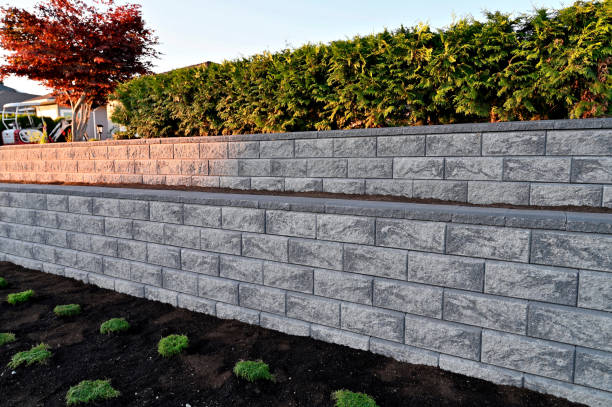
Concrete retaining wall blocks are frequently the most practical option for do-it-yourself projects because of their consistent size, ability to interlock, and accessibility at home improvement stores.
Creating the Wall Design
A well-designed retaining wall strikes a balance between structural integrity, use, and aesthetics. Here are some things to consider:
Batter (or setback): To increase stability, retaining walls should lean back somewhat into the slope, usually by 1 inch for every 12 inches of height.
Base depth: A strong foundation is essential. Generally speaking, one eighth of the wall height should be buried underground.
Width: For increased stability, the base should be wider than the top.
Features for drainage include perforated drain pipes, gravel backfill, and weep holes if needed.
Capstones: Help hold the wall together and give it a completed appearance.
Equipment & Supplies Required
You will require the following supplies:
Resources:
Blocks of retaining wall or other materials
Road base or crushed gravel
Drainage pipe with holes
Fabric filter
Soil backfill
Instruments:
Shovel
Mattock or pickaxe (for rough soil)
A wheelbarrow
Level
A tape measure
Line of strings
A rubber mallet
Plate compactor (rentable)
If cutting blocks, use a circular saw with a masonry blade.
Detailed Instructions for Constructing a Retaining Wall
Step 1: Dig a trench
Use stakes and string to mark the design of your wall. In order to bury the first course and make room for 4–6 inches of gravel, dig a trench for the base that is at least as broad as the blocks and deep enough. Make sure the bottom is completely compacted.
Step 2: Get the Base Ready
Four to six inches of crushed gravel should be added. Use a hand tamper or a plate compactor to compact it. Make sure this base layer is level in all directions because it supports the entire construction.
Step 3: Establish the Initial Course
The most crucial row is this one. The remainder of the wall will also be uneven if it is. If there is a slope, begin at the lowest spot and lay blocks side by side, regularly checking the level. Use a rubber mallet to pound them into position.
Installing the drainage system is step four.
Install a drainage pipe with holes behind the base course. To keep it from clogging, wrap it in filter cloth. To enable water to flow out to a specified drainage region, the pipe should have a modest slope.
Step 5: Constructing the Wall
For strength, keep stacking blocks, spacing the joints like bricks. If the blocks do not interlock, use adhesive. Before proceeding to the next course, backfill behind each one with gravel. To eliminate air pockets, compact the gravel.
Step 6: Compact and Backfill
Add backfill behind the wall in stages of 6 to 12 inches as you go higher, making sure to compact completely. The first 12 to 18 inches behind the wall should be gravel, followed by dirt. This lowers hydrostatic pressure and guarantees proper drainage.
Step 7: Cover the Wall
Use construction adhesive to add capstones once you’ve achieved the appropriate height. These give it strength and a polished appearance. Caps should be positioned slightly behind the face of the lower blocks to preserve the batter of the wall.
Step 8: Landscape and Cleanup
Grade the area to divert water away and backfill the topsoil behind the wall. As desired, add plants, mulch, or grass. To enhance appearance and inhibit weed development, you can also use decorative stone and landscape cloth.
Typical Errors to Avoid: Ignoring base preparation causes settling and cracking.
Ignoring drainage: Even the best-constructed wall can be destroyed by water pressure.
Building vertically: Stability requires a small backwards tilt.
Utilising unreinforced soil: When under stress, poor soil will crumble.
Ignoring permits: To prevent legal issues, always verify local codes.
Upkeep and Durability
Retaining walls require little upkeep after construction. Every year, check them for:
Leaning or bulging
Block displacement
Pooling of water
Erosion of the soil surrounding the base
Keep drainage lines clear and clean the weep holes. If any bricks come loose, reapply mortar or glue. Depending on the material, your wall may endure 20 to 50 years or longer with the right maintenance.
Cost Factors
Materials, labour (if needed), and site conditions all affect the overall cost of constructing a retaining wall. DIY concrete block walls under three feet high usually cost $15 to $30 per square foot. For intricate patterns, professional installation might cost anywhere from $30 to $60 per square foot or more.
To cut costs:
Think about repurposed materials.
Perform the work yourself.
Don’t exceed four feet in height.
Compare prices for bulk materials.
When to Employ Experts
If your wall will
Over four feet in height
Hold onto large weights, such as foundations or driveways.
be situated close to water sources or on a steep slope.
need engineering plans or licences
It is essential to seek advice from a qualified structural engineer or landscaping contractor. They will guarantee adherence to regional and safety laws.
In conclusion
One of the most significant landscaping upgrades you can do is the construction of a retaining wall. With the correct design, materials, and maintenance, it can improve your property’s appearance in addition to serving as a utilitarian requirement.
This tutorial gives you the information you need to get started, whether your goal is to create a lovely raised garden or to hold back a hillside. Every stage of the process, from excavation and drainage to stacking and finishing, is essential to creating a sturdy, long-lasting retaining wall.
So get your tools ready, get your hands dirty, and start changing your landscape, one block at a time.