Overview
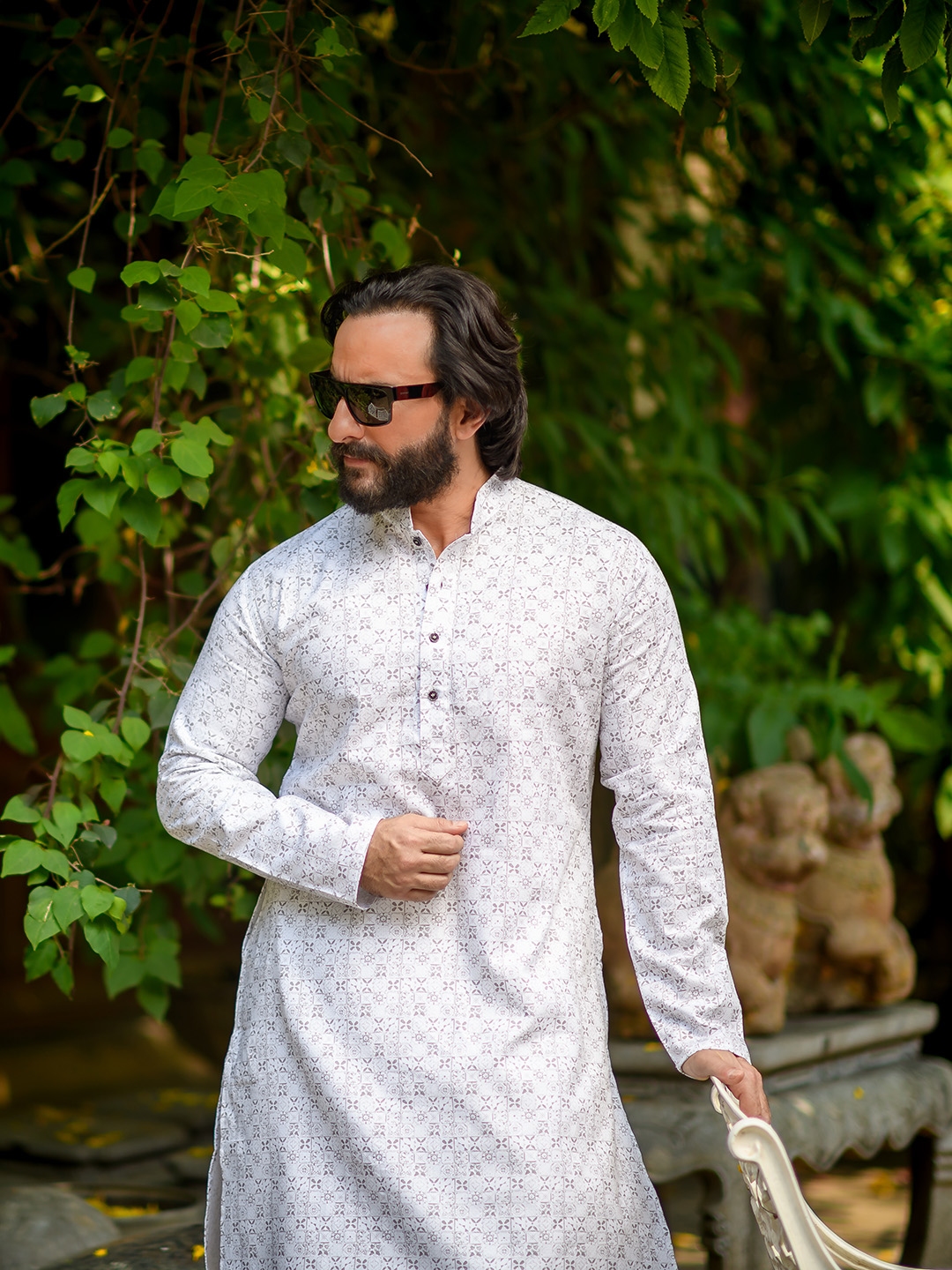
A classic item of men’s traditional clothing, the white kurta represents everlasting elegance, simplicity, and purity. It has a strong cultural foundation in South Asia and has assimilated into contemporary fashion with ease. The white kurta provides elegance and versatility for any occasion, whether it’s a religious function, a celebration, or a laid-back get-together. This article explores the meaning, fashions, materials, and styling advice related to men’s white kurtas.
Historical Importance
Originating in the Indian subcontinent, the kurta was historically worn by men as a modest and comfortable garment. Its fabric and pattern have changed over the years, keeping its cultural identity while adjusting to shifting fashion tastes. Particularly popular for its associations with simplicity and purity, the white kurta is a popular option for a variety of settings.
Options for White Kurta Fabrics
A kurta’s fabric greatly influences how comfortable and appropriate it is for various seasons:
Cotton: Breathable and comfy, cotton kurtas are ideal for everyday use and informal occasions, especially in warm climes.
Linen: Known for being airy and breathable, linen kurtas provide a laid-back yet elegant style that’s perfect for summer parties.
Silk: Often embellished with elaborate embroidery, silk kurtas radiate opulence and elegance for formal events.
Khadi: Eco-friendly and fashionable, khadi kurtas are made from a handwoven fabric with historical importance.
Blends of polyester: These are appropriate for frequent use and travel because they are long-lasting and little maintenance.
Variations in Design
Different styles of white kurtas are available to suit a range of preferences and events.
Straight-Cut Kurtas: A timeless style with a crisp silhouette that works well for semi-formal and casual settings.
A-Line Kurtas: These kurtas offer a comfortable fit and a hint of style thanks to their small waist flare.
Angrakha Style: This pattern gives the kurta a classic feel with its overlapping panels.
Mandarin Collar Kurtas: These kurtas give a modern take on the classic style with their stand-up collar.
Chikankari Embroidered Kurtas: These kurtas, which are native to Lucknow, are embellished with intricate hand embroidery that lends a creative touch.
Why You Should Wear a White Kurta
The white kurta’s adaptability makes it appropriate for a number of settings:
Religious Ceremonies: It is a perfect choice for pujas, Eid prayers, and other religious gatherings because of its relationship with purity.
Weddings: A white kurta can be worn with churidars or dhotis to create a royal look for the ceremony.
Festivals: A white kurta provides comfort and style during holidays like Diwali or Holi.
Casual Outings: Wearing a white kurta with jeans or chinos can give off a stylish, contemporary vibe while maintaining a more relaxed vibe.
Formal Events: A white kurta can be made into formal wear by adding embroidery or wearing it with a Nehru jacket.
Options for Pairing
A white kurta might appear better with the correct combination:
Churidars: A classic style that goes well with the straight-cut kurta, churidars are traditional and form-fitting.
Dhoti Pants: Wearing dhoti pants with a white kurta lends an aura of grandeur for a royal look.
Jeans or Chinos: A white kurta used with denim or chinos produces a fusion style for a modern appearance.
Palazzos: When worn with a white kurta, loose, comfortable palazzos provide a laid-back yet fashionable look.
Jodhpuri trousers: Wearing a white kurta with Jodhpuri trousers gives off an air of royalty and creates a classy image.
Options for Footwear
The appropriate shoes can improve the overall appearance:
Mojaris: Customary leather shoes that enhance ethnic attire and give the look more authenticity.
Loafers: For a contemporary take, wear loafers with a white kurta for a somewhat dressy appearance.
Sandals: Ideal for informal occasions, sandals are both fashionable and comfortable.
Boots: Wearing boots with a white kurta for a fusion look can make a distinctive fashion statement.
Enhancing the White Kurta with Accessories
Accessories can give the white kurta flair and individuality:
The sleeveless Nehru jacket is appropriate for formal settings and adds refinement.
Dupattas or stoles: Wearing a dupatta or stole can be elegant and ideal for festive occasions.
Watches: A traditional wristwatch can give an ensemble a refined touch.
Cufflinks: Cufflinks can provide the kurta a fashionable touch for a formal appearance.
Pocket Squares: You may add some flare and colour with a vibrant pocket square.
Maintaining White Kurtas
The right maintenance is necessary to keep the kurta’s immaculate whiteness:
Cleaning: To avoid colour fading, always wash white kurtas separately. To keep the fabric in good condition, use gentle detergents.
Drying: To avoid fading and fabric damage, let the kurta air dry in the shade.
Ironing: For a crisp finish, iron the kurta when it is still slightly moist.
Storage: To keep the kurta safe from dust and insects, keep it in a cool, dry location, ideally in a garment bag.
Style Advice
In order to maximise your white kurta:
Fit is important. Make sure the kurta is about the right size—neither too tight nor too loose.
Layering: You can add depth and flair by layering with a jacket or vest.
Minimalism: To make the kurta the main attraction, use few accessories.
Contrast: The white kurta can stand out when paired with contrasting hues.
Occasion-Appropriate: Always base the kurta’s design and material on the event.
In conclusion
More than just a piece of apparel, the white kurta for men is a representation of style, tradition, and adaptability. Every man’s wardrobe must have it because of its versatility in fitting different styles and events. Understanding the white kurta’s history, fabric selections, pattern variations, and styling advice will help one fully appreciate its classic charm. The white kurta guarantees that you always look elegant and sophisticated, whether you’re wearing it to a wedding, religious service, or just a laid-back get-together.